We pressure-tested 12 promo banner systems. Here is what won.
Twelve live operators. Twelve different approaches to promo banners. We ran the same creative brief through all of them and measured click-through, bounce, and FTD conversion. One pattern dominated.
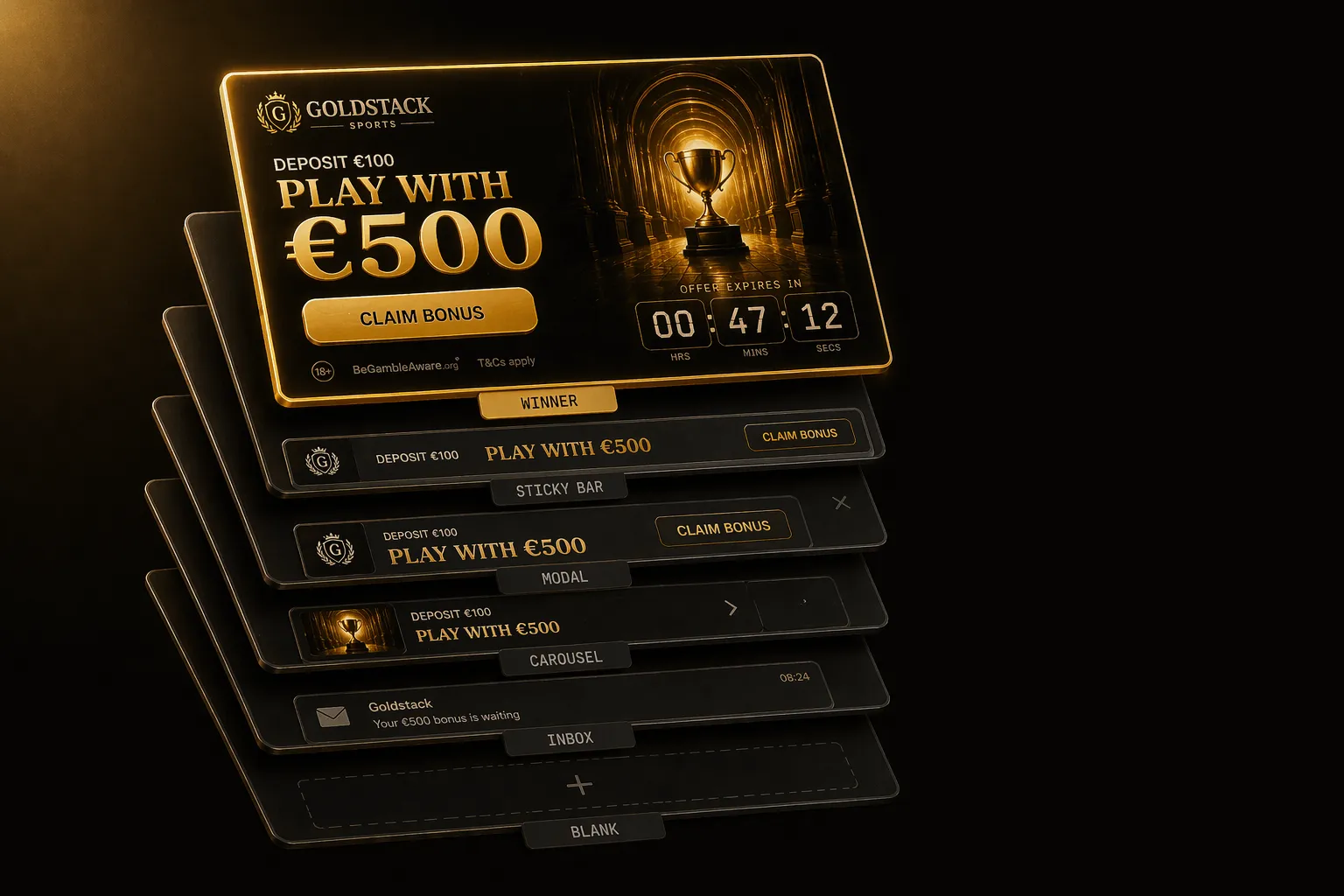
We gave 12 operators the same brief: a €200 welcome bonus, a 24-hour deadline, a target audience of 25–35 male sports bettors. Each ran their existing promo banner system. We tracked click-through from the homepage to the landing page, landing-to-registration, and registration-to-deposit over 72 hours.
The six approaches we saw
- Full-bleed hero banner with countdown timer and one CTA
- Persistent sticky bar with offer summary and dismiss button
- Interstitial modal on first visit with overlay blur
- In-lobby card carousel with 4–6 rotating offers
- Personalised inbox notification for registered users
- None — no promotional banner at all
The full-bleed hero with countdown timer produced the highest combined CTR-to-FTD rate — 3.1× higher than the carousel approach and 1.8× higher than the sticky bar.
Why carousels consistently underperform
The carousel distributes attention across 4–6 offers. Players see the first, evaluate it partially, watch it rotate away, and lose the decision moment. A focused single offer with a clear deadline creates a decision: take it now or lose it. The countdown is not a gimmick — it is a commitment device.
The sticky bar paradox
Sticky bars had the second-highest click-through rate but the lowest landing-to-deposit conversion. Players clicked out of curiosity — the persistent presence creates a low-commitment click. But the landing page then had to do more work to close. The full-bleed hero pre-qualifies intent before the click.
Built brand systems for 14 live operators. Fluent in compliance, mark-making, and motion.